Somewhere in the middle of building Raid & Rescue, the game needed a server. Scores had to live somewhere. Missions needed tuning without shipping a new build every time. So I did what everyone does. I opened a tab and started pricing AWS.
Then I closed it, because I remembered I already had a server. I’d been paying for it since the flip phone.
2004
You’ve probably never heard of DreamHost. Neither had I, in 2004.
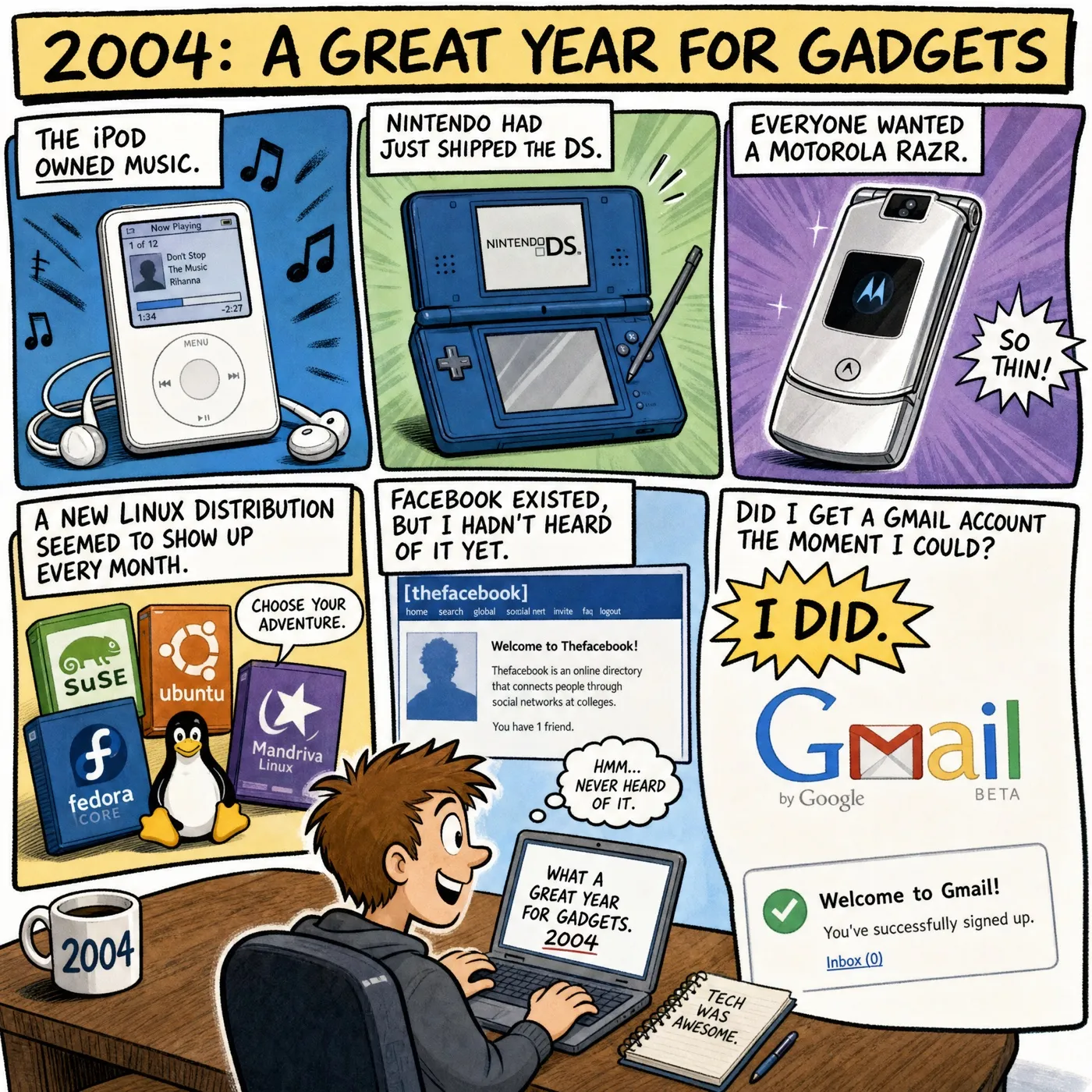
It was a good year for gadgets. The iPod owned music. Nintendo had just shipped the DS. Everyone wanted a Motorola RAZR, and a new Linux distribution seemed to show up every month. Facebook existed, but I hadn’t heard of it yet. Did I get a Gmail account the moment I could? I did.
Domain names were the other thing. Everyone I worked with was grabbing them, and grabbing a domain meant you needed somewhere to point it. A coworker mentioned a hosting company offering unlimited bandwidth for almost nothing. So I got one of those too. I was single, and I was a geek. I know.
The Account That Never Died
Here’s the part I didn’t plan. I kept it. For twenty-two years.
The plan changed names a few times. The control panel got redesigned more than once. Companies around it got bought, merged, and folded into bigger companies, and I kept expecting DreamHost to go the same way. It didn’t. Every month a small charge went through, and every month there was still a server on the other end of it.
Over the years it hosted a personal site, a CVS server, a string of experiments with whatever CMS was fashionable that month, and, I’m fairly sure, a WordPress install I’d rather not discuss.
For a long time, that arrangement held too.
So When I Needed a Backend
The choice was easier than it should have been. I know what the world runs on: AWS, Google Cloud, something with a Kubernetes cluster and a dashboard full of graphs. I’ve built on those at day jobs. For a game written on nights and weekends by one person, they solve problems I don’t have and bill for them anyway.
What I actually needed was boring. Somewhere to run code, somewhere to keep data, a few jobs on a timer, and a way to push a change and have it be live. Shared hosting has done all of that since before the iPhone, and it does it for a flat monthly bill that doesn’t change when a mission goes viral for an afternoon. There’s more under the hood than that, and I’ll get into it another time. For now: it is not clever, and that’s the point.
The Fine Print
I’ll probably end up on a bigger cloud eventually. If the day comes that thousands of people are flying at once, I’ll be glad to have the problem. Until then, this works, and it works on an account I opened before I had kids, on a tip from a coworker whose name I’ve forgotten.
So thanks, DreamHost. Twenty-two years and I’ve never once thought about you, which is the highest compliment a host can get.
That link is an affiliate link. If you sign up through it I get a small credit, and you pay the same price either way.
More soon. Next time, the part where two AI commanders fight thousands of battles a night so you don’t have to.